Rocker vs Camber
Camber vs Rocker
Understand ski profiles and how they affect edge grip, float, and feel on snow.
What is Camber?
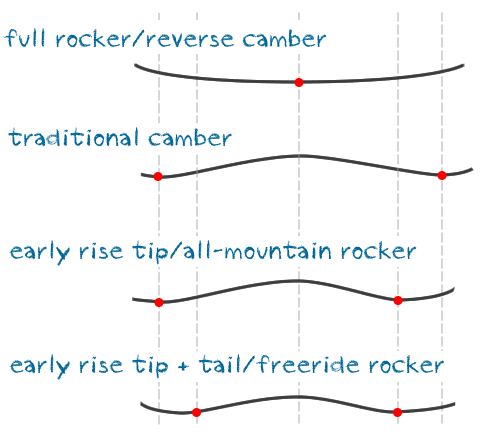
Camber is the classic arch shape a ski makes when resting flat. If you hold skis base-to-base, most traditionally cambered skis will not touch under the bindings.
When flexed into a turn, camber loads energy into the ski and helps create strong edge grip, rebound, and stability. Cambered skis are often more directional, precise, and confidence inspiring at speed.
What is Rocker?
Rocker is the opposite of camber. You will notice the ski rises earlier away from the snow at the tip, tail, or both ends.
Rocker makes skis easier to pivot, smoother to initiate turns, and better in soft snow or powder. Heavily rockered skis are often more playful and surfy.
Common Ski Profiles
| Ski Type | Description | Example |
|---|---|---|
| Traditional Camber | Maximum effective edge and strong carving feel. Stable, precise, and more demanding. | Kastle MX83 |
| All-Mountain Rocker | Tip rocker with camber through the body of the ski. Easier turn entry while still holding an edge well. | Blizzard Brahma 88 |
| Freeride Rocker | Rockered tips and tails with camber underfoot. Great off-trail maneuverability with versatile performance. | Salomon QST 106 |
| Reverse Camber | Full rocker profile. Very pivoty, slashy, and playful in soft snow. | Black Crows Corvus |
Tips for Sizing Rockered Skis
Rockered skis often feel shorter than a traditionally cambered ski of the same measured length. That is because less of the ski is in contact with the snow.
If you are moving into a rockered ski, it is common to size up a few centimeters, especially if the ski has deep tip or tail rocker.
If you are unsure, we are always happy to help match the ski profile to your riding style and terrain.
What is Camber? You can visualize camber as the concave arch the ski makes with the snow. Camber is why most skis don't contact each other under the bindings when you hold them base-to-base. It gives the skis energy and pop, and when you flex the ski through a turn, this shape gives you edge grip. Traditionally cambered skis are associated with being more directional and more demanding, but very stable.
What is Rocker? A few years ago, we were calling it a new technology in the ski industry. Now, you'll find some amount of rocker in most skis, and some skis have wild amounts. You'll see it as the ski surface's early departure from the snow, or the splay at the tip and tail. Rocker can be found in the tip, tail, or fully throughout the ski. Visualize it as the opposite of camber. It gives you easier turn initiation, makes a ski more pivot-y, and provides more floatation in deep snow. Heavily rockered skis are associated with being more playful.
Rocker vs Camber: Ski Types
| Ski Type | Description | Example |
|---|---|---|
| Traditional Camber | Maximum effective edge. Skis arch from tip to tail. Great for carving, more difficult to maneuver. | Kastle MX83 |
| All-Mountain Rocker | Skis contact the snow down further down the tips. Camber extends through tails. With just tip rocker, turns are more easily initiated, while still holding carves well. | Blizzard Brahma 88 |
| Freeride Rocker | Rocker in the tips and tails with camber underfoot. More manueverable for primarily skiing off-trail, while having all-mountain versatility. | Salomon QST 106 |
| Reverse Camber | Full rocker. Skis look like bananas, with contact underfoot and rise through tips and tails. This makes them very pivot-y, great for playful skiers looking to slash. | Black Crows Crovus |
Tips for Sizing Rockered Skis
If there's a rocker in the ski, at the tip or tail, or both, you may want to size your ski a little differently. The deeper the rocker, the point of contact with the snow will move lower down the ski length. The same is true of the tail rocker: a generously rockered tail will shorten the amount of contact the rear of the ski makes with the snow surface. Rockered skis therefore "ski shorter" than a traditionally cambered ski with the same measured length. If you're buying a rockered ski, feel free to add a few centimeters to your size range, and we don't recommend going shorter if you're moving from a more traditional ski to an aggressively rockered model.
If you'd like, you can contact us to find out the degree of rocker in a particular ski and how it will perform in various snow conditions. As always, feel free to call us (719) 465-2450 to discuss the right ski length for you. We love to chat skis!